
STUDIO RELAKS
STUDIO RELAX

Lymphedema Recovery and Rehabilitation Center
Studio Relax is the first private Center for Lymphedema Recovery and Rehabilitation offering MANUAL LYMPHATIC DRAINAGE, established in 2004. Our specialists are trained in the method developed by Professor Michael Földi.
At our Center, you will find a pleasant and welcoming atmosphere, exceptional professionalism, and an individual approach to every client. Take some time for yourself, too. Trust our physiotherapists and occupational therapists.

THERAPEUTIC PROCEDURES AND SERVICES
LYMPHEDEMA TREATMENT


Studio Relax is the first private Center for lymphedema recovery and rehabilitation to offer MANUAL LYMPHATIC DRAINAGE. The Center opened its doors in 2004. Our specialists are trained in the method developed by Professor Michael Földi.
Lymphedema treatment – recovery and rehabilitation through manual lymphatic drainage.
Studio Relax is the first private Center for recovery and rehabilitation of lymphedema, offering the procedure known as MANUAL LYMPHATIC DRAINAGE. The Center opened its doors in 2004. Our specialists are trained in the method developed by Professor Michael Földi.
Lymphedema treatment – recovery and rehabilitation through manual lymphatic drainageWhat is edema?
Edema results from an imbalance in the transport of interstitial fluid, leading to an abnormal accumulation of fluid in the tissues. Chronic lymphedema is a pathological condition that causes a persistent and progressive increase in the volume of the limbs (and sometimes the body) due to lymphatic stasis resulting from various changes in the lymphatic system.
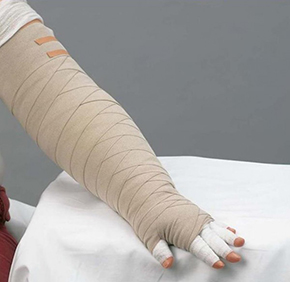
The gold standard in lymphedema treatment is considered to be Complete Decongestive Therapy (CDT), which combines several methods: manual lymphatic drainage, compression bandaging, exercise, and skin care.
Chronic lymphedema can be divided into two groups: primary lymphedema, when swelling is caused by congenital abnormalities of the lymphatic system, and secondary lymphedema, when the condition results from external causes such as surgical procedures, injuries, and other factors that mechanically obstruct the lymphatic pathways, leading to lymphatic stasis and tissue swelling. Three stages of lymphostatic edema are distinguished:
Stage One: This stage is considered fully reversible with appropriate treatment, and no fibrosclerotic changes are observed. The tissue is soft, there is no pain, and the skin color remains unchanged. Pressing the skin with a finger leaves a clear indentation. Lymphedema is indicated when the circumference of a specific part of a limb increases by 2 cm or its volume increases by 200 ml compared with the corresponding area on the opposite limb.
Stage Two: Fibrosclerotic changes begin to develop in the tissues. This condition is irreversible because fibrosis can be softened but not eliminated. The swollen tissue begins to harden, and pressure leaves only a shallow indentation. At this stage, lymphedema generally does not cause pain.
Stage Three: Also known as lymphatic elephantiasis. Fibrosclerotic tissue remodeling is now far advanced. Appropriate treatment, including manual lymphatic drainage (MLD), can improve the condition, but complete reversibility is no longer possible at this stage.
In the third stage, some proteins turn into a gel-like substance, while fatty tissue increases. If edema persists for a prolonged period, intracellular edema may develop, leading to rapid cell death. Fibrosis of the connective tissue also extends to the lymphatic vessels, arteries, and veins located within the tissue.
Secondary lymphedema of the upper limbs, also known as post-mastectomy lymphedema, is a classic indication for manual lymphatic drainage.
This involves a mechanical obstruction of lymphatic flow following the removal of axillary lymph nodes. Approximately 60% of all cases of secondary lymphedema occur following breast cancer. Recent data indicate that this type of edema develops in 20% of patients who have undergone breast cancer surgery and is associated with radiotherapy.
How does MANUAL LYMPHATIC DRAINAGE work?
The therapeutic effect of manual lymphatic drainage (MLD) lies in its multifaceted action. Following manual lymphatic drainage, swelling may decrease, pain may be relieved, and skeletal muscles may relax. These diverse effects explain the wide range of therapeutic applications of this procedure.
A manual lymphatic drainage treatment session for lymphedema lasts between 30 minutes and one hour. A course of 10 to 20 sessions is performed daily, followed by maintenance therapy once or twice a week. The treatment course is repeated after six months.
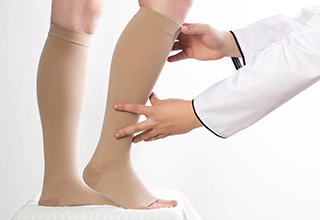
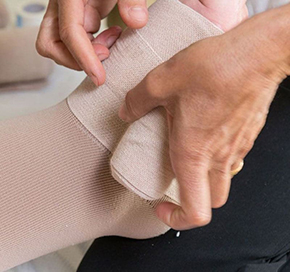
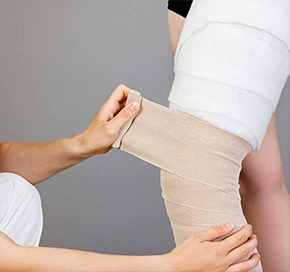
It is important to note that bandaging must not be neglected alongside manual lymphatic drainage (MLD) in the treatment of lymphedema. The combination of these two elements is essential for successful treatment. Compression bandaging is performed using low-stretch bandages applied according to a specific technique, evenly and in a conical shape. The bandage must be worn for 24 hours. Only after a stable therapeutic result has been achieved can bandaging be replaced with a compression sleeve, which is removed at night. A specially selected set of exercises complements and supports the treatment.
It is particularly important to know that patients with lymphedema should not receive conventional deep-tissue massage, as it can worsen the condition of the affected limb. Manual lymphatic drainage is the appropriate treatment in these cases.
Successful treatment with manual lymphatic drainage (MLD) also requires the patient's cooperation. Patients actively participate in their treatment and are taught how to maintain the results achieved. Whenever possible, the swollen arm should be kept at shoulder height, should not be allowed to hang down, and lying on it should be avoided. The arm should be moved gently and frequently for short periods to help prevent muscle wasting. Muscle contractions stimulate venous and lymphatic drainage.
The patient must protect the swollen arm from even minor injuries. Blood samples should not be taken from the affected arm, and injections, blood pressure measurements, gardening without gloves, carrying heavy objects, and any damage to the skin should be avoided. If bruising occurs as a result of an injury, manual lymphatic drainage should be performed promptly. Clothing must not compress the limb; for example, bra straps should be wide, and lightweight breast prostheses are preferable. The risk of edema increases with excess body weight, so it is important to follow a diet low in table salt.
Postoperative manual lymphatic drainage (MLD) is recommended as a preventive measure because it helps treat subclinical edema.
VEGA TEST – A BIOENERGETIC TEST THAT DETERMINES YOUR DIET

As strange as it may sound, you can eat fatty meats and still lose weight. Alternatively, you may follow the Atkins, Japanese, Canadian, South Beach, lunar, or any other fashionable diet and not lose a single gram... Why do some people starve without losing weight, while others eat as much as they want without gaining weight? Pessimists may say it is a matter of metabolism, but that is not necessarily the whole story. Some foods suit your body and provide it with energy, while others are not fully broken down and accumulate in unwanted fat deposits.
Stay slim without hunger or exhausting diets. Choose an intelligent solution for a healthy, slender body – the innovative VEGA food intolerance test.
The computerized VEGA test is bloodless, painless, quick, safe, radiation-free, convenient, and accurate.
It is useful because it provides immediate answers to questions we frequently ask:
- How can we lose weight without starving ourselves?
- What is the most suitable food for maintaining good health?
- Starvation is dangerous. You cannot and should not starve yourself for the rest of your life.
OTHER SERVICES
MASSAGE

Massage involves manipulating the superficial and deeper layers of muscles and connective tissue using various techniques to improve function, support the healing process, reduce muscle reflex activity, suppress motor neuron excitability, promote relaxation and well-being, and provide recreational benefits.
Massage involves applying pressure to the body in a structured or unstructured manner, either stationary or through movement, using the hands or mechanical devices. Targeted tissues may include muscles, tendons, ligaments, and lymphatic vessels. Massage can be performed using the hands, fingers, elbows, knees, or feet.
PRESSOTHERAPY

The pressotherapy/compression therapy devices SC-2004-OC / SC-2008-OC are pneumatic compression devices intended for the primary or supplementary treatment of primary or secondary lymphedema. The devices are also intended for use as an adjunctive or alternative treatment for venous insufficiency and chronic venous stasis ulcers associated with venous insufficiency, as well as for the general treatment of limb edema. They are designed for use both at home and in hospitals and specialized centers.
Pressotherapy is described as a detoxifying procedure that uses lymphatic drainage to help the body eliminate toxins. Pressotherapy is widely used in medicine because of its antispasmodic effects. It is also used in the treatment of varicose veins and may help manage postoperative swelling. In addition, it is recommended as a method of improving blood circulation and lymphatic flow.
KINESIO TAPING

The tape's natural elasticity creates a microscopic lifting effect on the skin, which is said to support healing in both the nervous and circulatory systems. Reducing pressure on pain receptors may quickly relieve acute pain, while improving blood flow and lymphatic drainage can reduce swelling and support recovery.
Kinesiology Tape
- Provides structural support for joints and muscles without restricting the normal range of movement.
- Helps correct improper muscle function by providing neurosensory feedback during movement.
- Helps relieve pain associated with acute injuries and chronic conditions.
- Helps reduce swelling and inflammation by promoting lymphatic drainage.
- Supports faster recovery by improving blood flow to affected tissues.
- Helps prevent overloading and excessive contraction of working muscles.
- Supports recovery after intense physical exercise.
- Helps restore the normal function of an injured muscle.
- Helps increase muscle tone in injured or neurologically impaired muscles.
STUDIO RELAX
Address:
Sofia, 20 Dr. Stefan Sarafov Street
Phone:
02 / 851 09 48
0884 71 81 85
0888 059 172
E-mail:
studiorelax@abv.bg
Website:
https://studio-relax.info/