

Medilink
Medilink was founded in 2000 in the city of Varna with a core activity focused on direct import and nationwide distribution of medical equipment, consumables, orthoses and assistive devices. At present, Medilink operates offices in Varna, Sofia, Burgas and Haskovo.


ABOUT US:
Medilink was founded in 2000 in the city of Varna with a main activity of direct import and distribution throughout Bulgaria of medical equipment, consumables, orthoses and assistive devices. The company specializes in supplying high-tech solutions for hospitals, medical centers, private practices and specialized clinics, offering products that comply with modern European standards for quality and safety. Its portfolio includes equipment for diagnostics, monitoring and therapy, as well as a wide range of consumables for daily clinical work. Medilink works with established international manufacturers and maintains long-term partnerships, which ensures reliable deliveries and sustainable service support. The company follows a policy of continuous renewal of its product range in order to meet new technological trends in medicine and the requirements of healthcare institutions.

Since its establishment, Medilink has built a network of regular clients across the country. The company employs 34 highly qualified staff members with medical, technical and economic university education, who have extensive experience in medical technology and the healthcare sector. The team includes product specialists, medical consultants and service engineers who provide professional support in the selection, implementation and maintenance of equipment. Medilink organizes on-site trainings and demonstrations to help medical teams use the equipment in an optimal way. The company participates in specialized medical forums, congresses and exhibitions, where it presents new technologies and solutions for various medical specialties. Through this active activity, Medilink maintains a high level of competence and remains up to date with the development of medical science and technology.
Why clients choose us:
At present, Medilink has offices in Varna and Haskovo and sales representatives in Sofia and Burgas, as well as a warehouse of 680 sq.m. Our team consists of 34 well-trained specialists with high medical, economic and technical qualifications. The geographical coverage allows quick response to service requests and on-site demonstrations in different regions of the country. The company maintains long-term relationships with hospitals, diagnostic and consultative centers, private clinics and individual practices. Through a combination of professionalism, technical competence and reliable service, Medilink has established itself as a preferred partner for medical equipment in Bulgaria.
Since its establishment, Medilink has built a network of regular clients across the country. The company employs 34 highly qualified staff members with medical, technical and economic university education, who have extensive experience in medical technology and the healthcare sector. The team includes product specialists, medical consultants and service engineers who provide professional support in the selection, implementation and maintenance of equipment. Medilink organizes on-site trainings and demonstrations to help medical teams use the equipment in an optimal way. The company participates in specialized medical forums, congresses and exhibitions, where it presents new technologies and solutions for various medical specialties. Through this active activity, Medilink maintains a high level of competence and remains up to date with the development of medical science and technology.
Why clients choose us:
- Accuracy and reliability of deliveries. Medilink operates with clearly structured logistics processes that ensure timely execution of orders and minimize the risk of delays. Clients receive prior information about lead times, delivery conditions and stock availability, which facilitates planning of their activities. For urgent requests, accelerated deliveries are provided, tailored to the needs of healthcare facilities.
- Comprehensive solutions and a wide range of products. The company offers solutions for multiple medical specialties – cardiology, neurology, surgery, orthopedics, ophthalmology, ENT and OB/GYN, which allows complete equipment of departments and practices from a single supplier. This reduces the administrative burden for clients and ensures better compatibility between systems and devices.
- Stock availability – fast delivery capability. Medilink maintains significant stock levels of key items, consumables and spare parts, which allows short response times when additional deliveries or component replacements are needed. This is particularly important for healthcare facilities that rely on uninterrupted diagnostic and therapeutic processes.
- Individual approach and commitment to each client’s project. For every healthcare institution, Medilink prepares customized proposals tailored to the specifics of the department, workload and available budget. The team advises on the optimal configuration of equipment, upgrade options and integration with existing systems.
- Competitive prices and flexible payment schemes. The company offers various financial models – standard purchase, installment plans, framework agreements and other forms of cooperation that facilitate investments in medical equipment. This enables healthcare facilities to plan their budgets better and secure modern equipment without compromising quality.
At present, Medilink has offices in Varna and Haskovo and sales representatives in Sofia and Burgas, as well as a warehouse of 680 sq.m. Our team consists of 34 well-trained specialists with high medical, economic and technical qualifications. The geographical coverage allows quick response to service requests and on-site demonstrations in different regions of the country. The company maintains long-term relationships with hospitals, diagnostic and consultative centers, private clinics and individual practices. Through a combination of professionalism, technical competence and reliable service, Medilink has established itself as a preferred partner for medical equipment in Bulgaria.
Products:
Cardiology
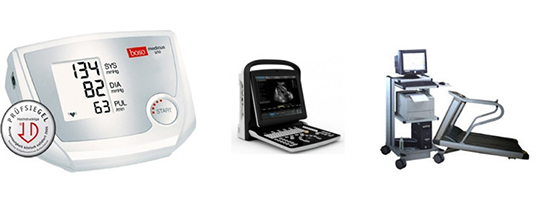
- ECG devices – the ECG systems offered are designed for routine and specialized cardiology diagnostics, supporting multi-channel (3/6/12-channel) ECG recording. The devices feature digital signal filtering, automatic measurement of intervals and segments, and the ability to store and transfer data to computer systems. They are suitable for use in hospital departments, emergency units, cardiology practices and outpatient clinics. Some configurations allow integration with stress-test and Holter monitoring systems, expanding diagnostic capabilities.
- Electronic blood pressure monitors, Germany – Riester, Boso – the electronic blood pressure monitors provide accurate and reproducible results using oscillometric measurement and built-in algorithms for artifact filtering. They are suitable for daily clinical control, monitoring of hypertensive patients and preventive examinations. The devices are designed for intensive use in hospital settings and outpatient practices, with comfortable cuffs and user-friendly interfaces.
- Ultrasound systems – the ultrasound systems offered by Medilink are suitable for cardiology and general imaging, supporting various modes (B-mode, M-mode, Doppler modes). They provide high image resolution and enable detailed assessment of cardiac structures, vessels and soft tissues. Depending on the configuration, they can be used in cardiology, internal medicine, vascular diagnostics and other specialties.
- Mechanical blood pressure monitors, Germany – Riester, Boso – mechanical sphygmomanometers are intended for clinical use, providing high accuracy and reliability for auscultatory blood pressure measurement. They are suitable for departments requiring precise blood pressure control, including intensive care units and cardiology departments. The devices are made of durable materials and designed for long-term use.
- Mechanical blood pressure monitors, Italy Ca-mi – these devices combine the classic auscultatory method with ergonomic design and comfortable cuffs. They are suitable for daily clinical practice, preventive examinations and supervised home monitoring. They provide stable and accurate measurements and are easy to maintain and operate.
- Stress-test systems – stress-test systems enable assessment of cardiac function under physical load, combining ECG monitoring, blood pressure measurement and load control (treadmill or bicycle ergometer). They are suitable for diagnosing ischemic heart disease, evaluating functional capacity and monitoring therapy outcomes. Software modules provide detailed analysis and archiving of results.
- ECG and RR Holter systems – Holter systems for long-term ECG and blood pressure monitoring allow 24–72-hour recording in patients with arrhythmias, episodic hypertension or other cardiac conditions. The devices are compact and comfortable to wear, and specialized software analyzes the recordings and generates detailed reports for the physician. This supports detection of intermittent arrhythmias and assessment of therapy effectiveness.
Neurology
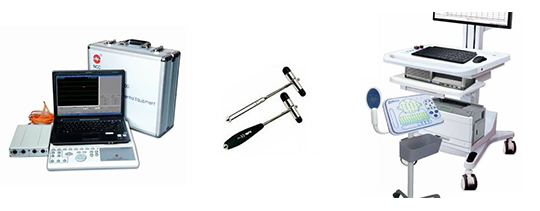
- Doppler systems – Doppler systems are intended for non-invasive assessment of blood flow in peripheral and cerebral vessels. They enable diagnosis of stenoses, occlusions and vascular abnormalities, as well as monitoring of therapy outcomes. The devices support different transducer frequencies and operating modes, making them suitable for vascular neurology and angiology.
- EEG – electroencephalography systems record the electrical activity of the brain and are used for diagnosing epilepsy, encephalopathies, sleep disorders and other neurological conditions. The devices support multi-channel recording, digital signal processing and long-term monitoring. The software allows analysis of different frequency bands and visualization of pathological changes.
- EMG – electromyography systems are used to study the peripheral nervous system and muscles, enabling diagnosis of neuropathies, myopathies and neuromuscular disorders. They support various examination protocols, including nerve conduction studies and needle EMG. Data are analyzed using specialized software that assists in interpretation of results.
- Neurological hammers – neurological hammers are essential tools for clinical assessment of tendon reflexes and neurological status. They are made of high-quality materials and provide precise and reproducible stimuli during examination. They are suitable for daily use in neurology practices and hospital departments.
Surgery
- Automatic staplers, biopsy needles, stents – automatic staplers provide fast and reliable tissue closure in various surgical procedures, reducing operative time and the risk of complications. Biopsy needles are designed for precise tissue sampling under imaging guidance, while stents are used to maintain patency of vessels and hollow organs. All products comply with high standards for sterility and biocompatibility.
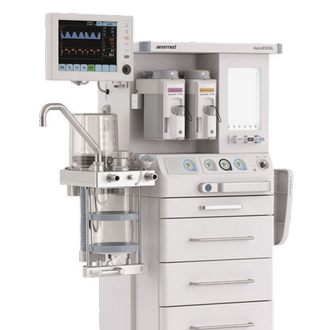
- Anesthesia machines – anesthesia systems provide controlled delivery of gas mixtures and inhalation anesthetics, as well as monitoring of vital signs during surgical interventions. They support different ventilation modes and are equipped with safety systems and alarms. Suitable for operating rooms, intensive care units and emergency departments.
- Vacuum pumps – vacuum pumps are used for aspiration of fluids and secretions during surgery and in the postoperative period. They provide stable and adjustable vacuum and are designed for continuous operation in operating rooms and intensive care units. Their construction allows easy cleaning and maintenance.
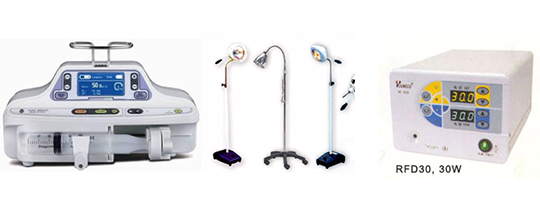
- Electro- and radio-surgical units – electrosurgical and radiofrequency units enable precise cutting and coagulation of tissues with minimal blood loss. They are used in general, vascular, plastic and other types of surgery. The devices support different operating modes and power levels, allowing adaptation to specific surgical techniques.
- Warming blankets and mattresses for OR and ICU – patient warming systems reduce the risk of hypothermia during and after surgery. They provide uniform heat distribution and allow individual temperature adjustment according to clinical needs. Suitable for operating rooms, recovery rooms and intensive care units.
- Operating lights – operating lights provide high-intensity illumination, uniform light field and optimal color temperature for precise visualization of the surgical field. Some models offer adjustable focus and color temperature, as well as integration with video systems.
- Operating tables – operating tables are designed for stable patient positioning during various surgical procedures. They allow multi-directional adjustment of height, tilt and position, providing ergonomic conditions for the surgical team. Their construction meets safety requirements and allows easy disinfection.
Orthopedics
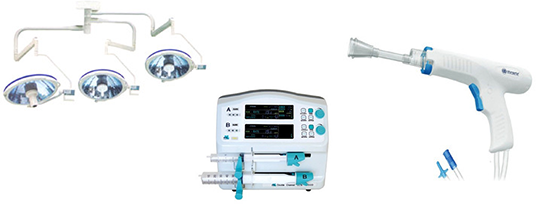
- Jet Lavage systems – Jet Lavage systems are used for high-efficiency cleaning of bone and soft tissues during orthopedic surgery. They provide controlled pressure and flow of irrigation fluid, helping to remove bone fragments and contaminants from the surgical field. This reduces the risk of infectious complications and improves conditions for implant placement.
- Anesthesia machines – used in orthopedic surgery to provide general or regional anesthesia, maintaining stable ventilation and gas mixture parameters. The systems are equipped with monitoring and alarm functions that ensure patient safety during prolonged procedures.
- Drills and saws – orthopedic drills and saws are designed for precise bone preparation in osteosynthesis, joint replacement and other orthopedic procedures. They provide high speed and control, reducing the risk of thermal damage to tissues. The instruments are compatible with various types of burrs and blades.
- Compression cuffs – automatic and manual – compression systems are used for prevention of venous thrombosis and improvement of venous return during and after orthopedic surgery. Automatic devices provide cyclic compression with controlled parameters, while manual cuffs are suitable for shorter procedures and specific clinical situations.
- Metal osteosynthesis systems and external fixators – osteosynthesis systems include plates, screws, nails and external fixators designed for stabilization of fractures and correction of deformities. They are made of high-quality biocompatible materials and are available in various sizes and configurations adapted to anatomy and type of injury.
- Operating lights – provide optimal illumination of the surgical field in orthopedic procedures, including work in deep and hard-to-reach areas. High intensity and uniform light distribution support precise surgical work.
- Operating tables – orthopedic operating tables allow specialized positioning of limbs and body, including the use of additional attachments and traction systems. This facilitates access to the surgical field and improves conditions for complex orthopedic procedures.
- Goniometers – orthopedic goniometers are used to measure joint angles and bone alignment during preoperative planning and postoperative follow-up. They support assessment of corrections, deformities and range of motion, providing objective clinical data.
Ophthalmology
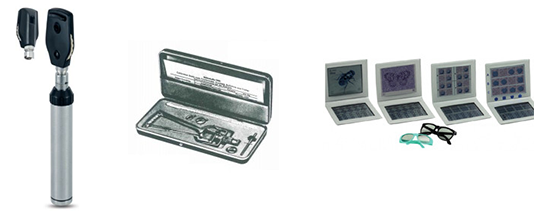
- Biomicroscopes – slit-lamp biomicroscopes provide detailed examination of the anterior segment of the eye, cornea, conjunctiva and lens. They enable assessment of pathological changes, trauma and degenerative processes and are essential tools in daily ophthalmic practice.
- Ophthalmoscopes – ophthalmoscopes are used to examine the fundus, retina and optic nerve. They enable diagnosis of retinopathies, glaucoma, vascular changes and other diseases affecting the posterior segment of the eye. The devices offer different illumination modes and filters for improved visualization.
- Ophthalmic test systems – include various test tools for assessing visual acuity, color vision, contrast sensitivity and other visual functions. They are used in primary examinations, preventive screening and follow-up of patients with eye diseases.
- Pachymeters – pachymeters measure corneal thickness and are important tools for glaucoma risk assessment, preoperative planning and postoperative follow-up after refractive surgery. Accurate measurements support interpretation of intraocular pressure and therapeutic decision-making.
- Trial frames – used for subjective refraction and selection of corrective lenses. They allow combination of different lenses and precise adjustment according to the patient’s needs.
- Skiascopes – skiascopes are used for objective refraction assessment by observing the reflection of a light beam from the fundus. They are particularly useful in examining children and patients for whom subjective methods are difficult.
- Schiotz tonometers – mechanical Schiotz tonometers are used to measure intraocular pressure. They are reliable tools for screening and follow-up of patients with glaucoma and other conditions associated with elevated intraocular pressure.
ENT
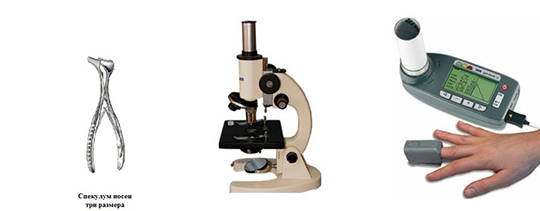
- Video otoscopes – video otoscopes allow visualization of the external auditory canal and tympanic membrane on a monitor, facilitating diagnosis and documentation of findings. They are suitable for specialized ENT practices and clinics, as well as for training purposes.
- ENT instruments – include a wide range of specialized instruments for diagnostic and therapeutic procedures in the ear, nose and throat region. They are made of high-quality materials and comply with sterilization and reusability requirements.
- Microscopes – surgical and diagnostic ENT microscopes provide high resolution and magnification when working in narrow anatomical spaces. They are used in microsurgical procedures on the ear, larynx and other structures.
- Otoscopes – otoscopes are essential tools for clinical examination of the ear canal and tympanic membrane. They provide focused illumination and optical systems for detailed assessment of pathological changes.
- Spirometers – spirometers are used to assess lung function by measuring respiratory volumes and flow rates. They are important tools for diagnosing and monitoring chronic obstructive pulmonary disease, asthma and other respiratory conditions.
- ENT illuminators – provide directed and intense illumination of the examined area during ENT examinations and procedures. They may be headlamps, stationary or mobile systems adapted to the needs of the practice.
- ENT illuminated curettes and forceps – used for precise manipulations in the nasal cavity, ear canal and other narrow spaces, combining mechanical instruments with local illumination. This improves visibility and safety of procedures.
- ENT units – ENT units are integrated workstations combining suction, illumination, instruments and additional diagnostic and therapeutic modules. They optimize workplace organization and increase examination efficiency.
OB/GYN
- Vacuum pumps – used in obstetrics and gynecology for various procedures, including aspiration and maintaining a clean surgical field. They provide stable and adjustable vacuum suitable for use in delivery rooms and operating theaters.
- Vein scopes – vein scopes assist in visualization of peripheral veins, facilitating venous access in difficult patients. They are particularly useful in neonates, children and patients with compromised venous access.
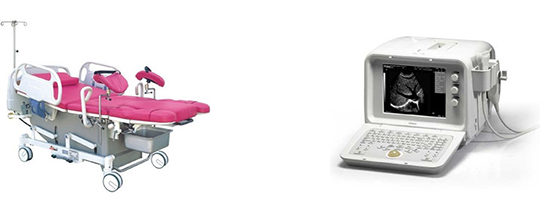
- Ultrasound systems – OB/GYN ultrasound systems enable detailed visualization of the fetus, placenta and uterine structures. They support various modes for prenatal diagnostics, assessment of fetal growth and pregnancy monitoring.
- OB/GYN instruments – include a wide range of instruments for gynecological examinations, diagnostic and surgical procedures. They are made of high-quality materials and comply with sterilization and safety requirements.
- Colposcopes and microscopes – colposcopes are used for detailed examination of the cervix, vagina and vulva, supporting early diagnosis of precancerous and cancerous lesions. Microscopes provide high resolution and the possibility to document findings.
- Delivery beds, gynecological tables and chairs – these products are designed for patient comfort and safety during examinations, procedures and childbirth. They allow multi-directional adjustment and adaptation to different clinical situations.
- Fetal monitors – fetal monitors provide continuous monitoring of fetal heart rate and uterine activity during pregnancy and labor. They support early detection of fetal distress and timely obstetric decision-making.
See more at www.medilinkbg.com
Medilink – Medical Equipment & Supplies
Address: Varna, Bregalnitsa Str. 26-28
Phone: +359 52 60 87 29, 61 23 08, +359 886 819 609
Email: medilinkco@gmail.com
Website: www.medilinkbg.com