
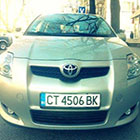
A comprehensive directory of licensed driving schools and driving instructors in Stara Zagora. Find the perfect driving course tailored to your specific requirements – theoretical training in modern classrooms, intensive behind-the-wheel practice on tracks and in urban traffic, preparation for official DAI (Automobile Administration) examinations, and refresher lessons for licensed drivers. Compare prices, instructional vehicles, lesson packages, and passing rates in one place.
Professional training of future drivers of motor vehicles is a fundamental pillar of road safety and the personal security of every participant in traffic. In today's urban environment, characterized by intense traffic, complex intersections, and continuously developing road infrastructure, acquiring a driving license should not be viewed merely as an administrative procedure or the acquisition of a new document. It is a complex, comprehensive process of building motor skills, spatial orientation, psychological resilience, and deep market maturity regarding the rules of the road. Choosing the right training venue among the licensed driving schools in Stara Zagora is the first and most important step for any future driver seeking long-term security behind the wheel.
Stara Zagora, as one of the major economic and logistical centers in Southern Bulgaria, possesses a developed and highly competitive palette of training centers and driving schools. This competition works entirely to the benefit of consumers, as it forces leading educational organizations to invest in a modern material-technical base, new instructional vehicles of various classes, contemporary computerized classrooms for theoretical education, and software simulators. To make an informed choice, it is necessary to examine the training in detail – from the structure of the curricula and the qualification of the instructors to the condition of the driving facility and the success rate in examinations before the Executive Agency "Automobile Administration" (historically known as DAI).
The accounting of your time and invested finances requires you to understand that the lowest price for a driving course is rarely a guarantee of quality. True added value is measured in the actual number of hours for behind-the-wheel practice, artisanal precision, and the patience of the instructor, an individual approach to students with high levels of anxiety, and full transparency in forming the final fees without hidden charges for internal exams, insurance, or vehicle rental for the official examination. In this detailed web guide, we will unfold absolutely all aspects of driving courses in Stara Zagora, helping you hit the road with self-confidence and a high driving culture.
Every legal and certified driving course for the most popular Category B is divided into two main and interrelated blocks – theoretical training and practical driving instruction. These two components are strictly regulated by the Ministry of Transport, Information Technology, and Communications, and skipping hours or executing them chaotically is software-wise impossible due to the introduction of electronic logbooks and digital control of the educational process.
Theoretical preparation includes a total of 40 academic hours. They are conducted in licensed classrooms of driving schools, equipped with multimedia systems, interactive boards, mock-ups of intersections, detailed diagrams of road signs, and software for simulating examination sheets. During the theoretical block, future drivers study the following key modules in depth:
Upon successful completion of the theoretical block and the internal examination within the driving school, the student acquires the right to start practical driving instruction. The practical part consists of a minimum of 31 academic hours (each with a duration of 50 minutes) directly behind the wheel of the instructional vehicle. This time is engineered logistically so that the student progresses through all levels of difficulty – from basic starting on a track to dynamic driving during peak hours in the city of Stara Zagora and managing the republican road network (interurban driving).
Professional driving schools in Stara Zagora do not limit themselves merely to training for passenger cars but maintain a massive licensing capacity for preparing drivers for absolutely all existing categories. This allows students to upgrade their qualifications or launch a professional career in the sphere of transport and logistics.
Depending on your personal or professional goals, leading centers offer specialized courses for the following groups of motor vehicles:
Practical driving instruction in modern driving schools in Stara Zagora follows a strictly structured pedagogical and engineering methodology. It is impossible for a student to be thrown into intense urban traffic during their very first hour. The training is divided into consecutive levels, each of which has specific goals and examination criteria for progressing to the next stage.
The initial stage is conducted on a closed training facility or on quiet, isolated streets with minimal traffic. Here, the future driver becomes familiar with the ergonomics of the driver's seat, the layout of the controls, the pedals, and the rearview mirrors. The main exercises at this stage include:
Once the student masters basic control over the vehicle, the training progresses to its second stage – driving in urban conditions with light to moderate traffic. In Stara Zagora, these are usually suburban neighborhoods like "Zeleznik", "Tri Chuchura", or the industrial zones. At this stage, the focus shifts from technical management to the road environment. Students learn to observe road signs, follow horizontal markings, shift the vehicle timely using turn signals, and navigate safely through T-junctions and standard intersections.
The third, most intense stage is driving during peak hours and navigating the city's most complex road junctions. Instructors direct attention to key arteries such as "Tsar Simeon Veliki" Blvd, "Slavyanski" Blvd, "Patriarh Evtimiy" Blvd, as well as roundabouts, which often represent a software and psychological puzzle for new drivers. Here, skills are built for rapid right-of-way evaluation, dynamic joining of the traffic column, recognizing the intentions of pedestrians, and proper parking – both parallel and perpendicular in real urban spaces.
One of the most frequent questions future drivers face when enrolling in a driving school in Stara Zagora is the choice between a vehicle with a mechanical (manual) or an automatic gearbox. Both variants have their technological characteristics, market advantages, and specific administrative consequences, which must be examined in detail before making a final decision.
The driving course on a vehicle with manual gears remains the gold standard in the industry. Managing such a vehicle requires perfect coordination between the left foot (the clutch pedal) and the right hand (the gear stick). The main software advantage of this choice is that after successfully passing the examination before DAI, the driver receives universal legal capacity – they have the legal right to manage both vehicles with manual and automatic transmissions without any restrictions.
On the other hand, the course on an instructional vehicle with an automatic gearbox is becoming increasingly popular due to the mass penetration of modern hybrid and fully electric vehicles on the market. With an automatic, management is significantly easier as there is no clutch pedal, and the transmission's software selects the correct gear itself. This reduces stress levels when starting on a slope and allows the student to concentrate 100% of their attention on the road situation and signs.
However, the bitter administrative truth must be taken into account: if you pass the state examination on a vehicle with an automatic gearbox, a specific restrictive code (code 78) is entered into your driving license. This software marker means that you have the right to manage ONLY vehicles with automatic transmissions. If in the future you need to drive a vehicle with manual gears, you will be obliged to pass through a new practical course and an additional examination before the Automobile Administration.
The choice of a driving school should not be based solely on geographic proximity to your house or on the most aggressive price offer on the internet. The driving course market is saturated, and unfortunately, unfair practices are still encountered where a low entry fee is compensated for by saving on actual driving hours or extorting additional payments. To protect your investment, you must perform an audit of the training centers based on several fundamental criteria.
The first and most important indicator is the qualification, artisanal approach, and reputation of the instructors for driving practice. Check whether the instructors in the chosen driving school possess a higher engineering or pedagogical education, which is a guarantee of methodological preparedness and pedagogical patience. A professional instructor does not shout, does not create additional tension, and does not use instructional hours to solve personal domestic tasks. He analyzes the student's mistakes software-wise, explains the reasons for them, and repeats the maneuver as many times as necessary for its full automation.
The second criterion is the condition and diversity of the fleet. Instructional vehicles must be technically sound, clean, passed through regular inspections, and equipped with dual control pedals for the instructor. Good practice is for the driving school to possess various classes of vehicles – from compact city hatchbacks to larger sedans and SUV models. This allows the student to choose a vehicle close to the one they plan to drive after acquiring legal capacity. Furthermore, modern instructional cars come equipped with real safety systems and assistants (ABS, ESP, parktronic), which are part of modern driving culture.
The third and frequently overlooked element is the full transparency of the training contract. Before paying an advance or signing any document, demand a detailed breakdown of the final price of the course. Be sure to ask what exactly the announced fee includes and check the following details:
The final phase of every driving course is passing the official state examination before the Executive Agency "Automobile Administration" (DAI). The exam is divided into two completely independent parts – theoretical and practical, and success in the first is a mandatory software condition for admission to the second.
The theoretical exam is conducted in specially equipped examination rooms of DAI, under strict video surveillance and jamming of any mobile signals to avoid fraud. The exam is taken on a digital tablet (electronic sheet), and the software generates an individual test for each candidate. For the most mass Category B, the electronic sheet contains a total of 45 questions, which carry a different number of points depending on their complexity. The maximum number of points is 97, and the exam is considered successfully passed if the candidate gathers a minimum of 87 points within the allocated 40 minutes.
The practical exam (driving) is conducted directly on the streets of Stara Zagora in the presence of a state examiner (chairman of the commission) and your previous instructor, who sits in the front seat without having the right to intervene in the management except at risk of a real traffic accident. The route is selected randomly by a software navigation system and includes driving in an urban environment with a duration of at least 25 minutes for Category B. During the driving, the examiner monitors under a magnifying glass your stability, precise compliance with right-of-way, speed, reaction when lane shifting, and the correct execution of parking maneuvers. Errors are recorded via a points system, and running a red light, violating right-of-way, or the instructor's intervention in the pedals leads to an immediate fail.
The activity of modern driving schools in Stara Zagora extends beyond the framework of basic training for new drivers. A very large percentage of consumers in the market require specific services related to refreshing neglected knowledge or restoring administrative status after imposed penalties under the Road Traffic Act.
Refresher driving hours are the ideal solution for people who have possessed a valid driving license for years but for various reasons (lack of a personal vehicle, long stay abroad, or experienced psychological stress after a traffic accident) have not practiced driving. Under this model, the training adapts entirely to the individual profile of the student. The instructor does not teach basic theory but helps eliminate the fear of urban traffic, restore motor memory for the car's dimensions, train specific daily routes (for example, from home to the workplace), and perfect parking techniques in busy urban zones.
Another important direction is specialized courses for restoring control points. Every driver in Bulgaria starts with an initial limit of 39 control points (for young drivers the limit is 26 points), which are deducted by KAT when committing various traffic violations. To avoid full loss of legal capacity and forced confiscation of the license, drivers have the right once a year to pass through a theoretical course to restore up to 13 control points. This course covers refreshing knowledge on road safety, analyzing the causes of severe accidents, and changes in the statutory framework.
According to Bulgarian legislation, you have the right to start theoretical and practical training for Category B at the earliest upon reaching 17 years and 9 months of age. However, the state driving exam before DAI can only be taken once you turn of age (exactly 18 years old).
To be registered software-wise in the electronic logbook of the Ministry of Transport, you must provide: a copy of an identity card, a copy of a diploma for completed minimum primary or secondary education (depending on the year of graduation), a medical certificate for a driver from the general practitioner, and one current passport-sized photo.
Depending on your personal availability, the organization of theoretical lectures in the driving school, and the intensity of driving schedules, a course usually lasts between 4 and 8 weeks. Express and fast courses can shorten this period, but without violating the mandatory 31 hours of driving practice.
If you fail to pass the driving exam, the law requires you to pass through additional mandatory training of a minimum of 4 academic hours of driving practice in the same or another driving school. Once these hours are entered electronically, you have the right to sign up for a new exam date after paying the respective state and administrative fee.
Investing in quality driving training is an investment in your own life and the security of your family. Stara Zagora offers excellent conditions for building top drivers, provided you make an informed, mature, and responsible choice of a training center. Do not be misled by cheap market tricks, demand accounting for every penny you pay, and bet on instructors who see in you a future colleague on the road, rather than just another number on the list.
To view the full list of verified, licensed, and highly-rated training centers in the region, see our specialized catalog.
View the full list and choose the best option here: View all driving schools in Stara Zagora
#DrivingSchools #DrivingCourses #StaraZagora #BehindTheWheel #DAIExam #CategoryB #RefresherLessons #RoadSafety #DrivingInstructor #BusinessBG